
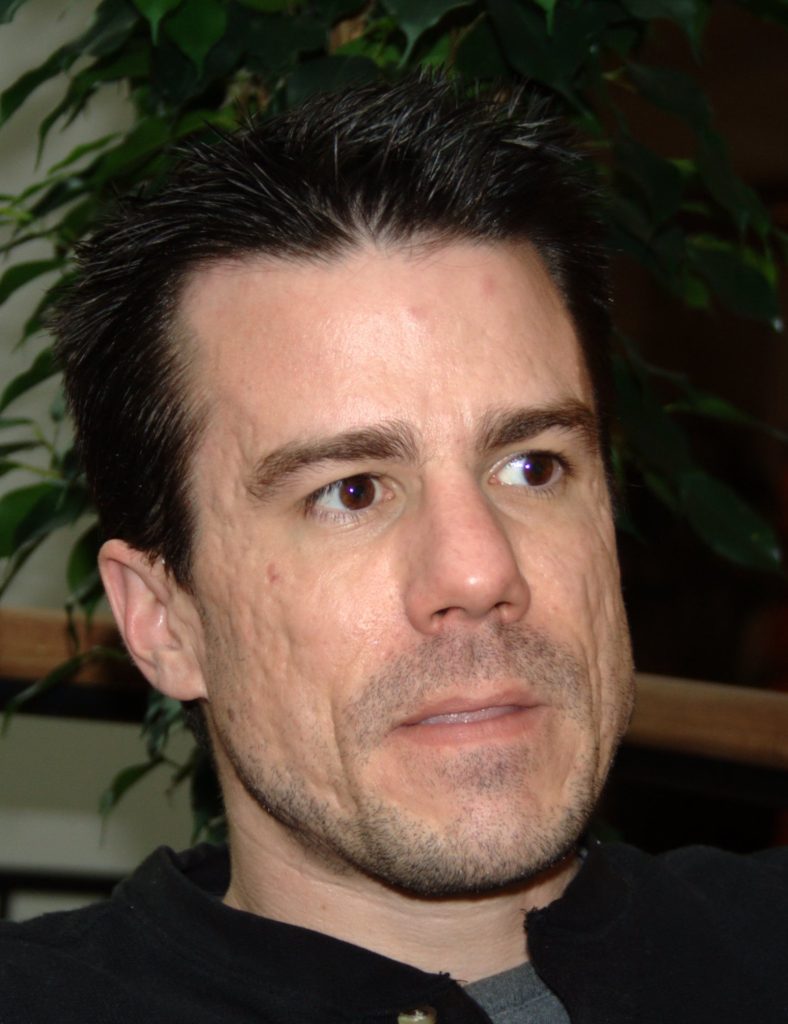
Sticker 009 · Back to Ian Murdock’s sticker in the album · Leggi la versione italiana
On 16 August 1993, Ian Murdock announced Debian. He wanted to build a Linux distribution that people around the world could help assemble and maintain. He also wrote the project’s first packaging tool. The enduring idea was to make the work shareable: volunteers could tend to different programs and deliver a system that people could install and keep up to date. Debian’s official project history.
What Ian Murdock founded in 1993
The Linux kernel lets programs use the processor, memory and devices. A distribution brings the kernel together with system tools and applications and defines how users install and update them. In the early 1990s, that work could make the difference between having access to a pile of software and having a computer you could set up and maintain.
Murdock was a student at Purdue University when he started Debian. The name combines Debra and Ian. In his manifesto, he described a project developed openly in the spirit of Linux and GNU, with care taken over how it was assembled and supported. The Free Software Foundation’s GNU Project sponsored Debian’s creation from November 1994 to November 1995. Ian Murdock’s Debian Manifesto · Debian’s release history.
From the first dpkg to Debian’s package system
A package can contain a program’s files and the information needed to install it. Debian’s history credits Murdock with writing the first tool named dpkg. It built packages in a Debian-specific binary format and could unpack and install them. Ian Jackson took over development, named the tool that handled the package format dpkg-deb, and wrote a new front end called dpkg that could handle dependencies and conflicts. By the March 1995 release of Debian 0.93R5, individual developers were maintaining many of the packages users could install after setting up the base system. History of early Debian packaging.
Today dpkg works with Debian package files and tracks their status on the computer. APT works a level above it. It reads the indexes of configured repositories, figures out which packages are needed, downloads them and calls dpkg for local operations. If an application requires a library that is absent, APT can include it in the same installation. The requirement becomes something the system can check. Debian Administrator’s Handbook on APT.
The historical code and a small example
The project history documents Murdock’s first dpkg. We could not verify both authorship and a reusable licence for an excerpt from that early implementation. The current sources are available in the dpkg repository on Debian Salsa under the GNU GPL, version 2.0 or later. The current repository licence does not establish the terms of the first implementation.
This teaching example was written for the article. It shows four metadata fields for a fictional package. Depends: bash says the package needs Bash to work. Debian Policy on package relationships.
Package: album-demo
Version: 1.0-1
Architecture: all
Depends: bash
Debian’s legacy is a shared achievement
Murdock led Debian until March 1996. On 5 July 1997 the project ratified the Debian Social Contract and the Debian Free Software Guidelines. Ean Schuessler suggested the idea of the contract, Bruce Perens drafted it, and Debian developers refined it. The contract sets out the project’s commitments to users and free software, and the guidelines help Debian decide which software meets its criteria. Maintainers, translators, documentation volunteers and security teams keep the system working. Ubuntu illustrates how Debian’s work can be carried forward: it builds on Debian and has its own community and release process. Debian Project leadership timeline · Debian Social Contract · Ubuntu’s account of its relationship with Debian.
2008 photo by Ilya Schurov, Computerra Weekly, cropped and rotated by Vacant0. Wikimedia Commons · CC BY-SA 2.0.
Nominate a programmer for the album
Who has made an outstanding contribution to software? We welcome nominations for widely known and lesser-known programmers. Give us a name, a specific project or contribution, and sources we can check. An email address is optional and useful if we need clarification. The editors review each nomination before deciding whether to publish it.


