
Sticker 007 · Richard Stallman · Back to the album card · Leggi in italiano
A program can cost nothing to download while leaving you without the right to modify it. A program can also be sold and grant you that right. Richard Stallman built a technical project around that distinction, GNU, and promoted a licence that protects the freedoms of people who receive software, the GNU GPL. Two of his early tools help explain why the project mattered: an editor and a compiler.
GNU: building a Unix-compatible system
On 27 September 1983 Stallman announced GNU. He set out to build a Unix-compatible system people could use and share freely. Development began in January 1984. The 1985 GNU Manifesto explained the project’s reasons and invited others to contribute. The Free Software Foundation was also founded in 1985. Stallman wrote the announcement. The system and its programs are the work of many people.
GNU Emacs and GCC: why both mattered
Stallman began working on GNU Emacs in September 1984. In his account of the project, he recalls that the editor was usable by early 1985. A programmable editor lets you turn a repetitive task into a command. You might add a menu entry that applies a transformation you often make to text. Emacs Lisp provides a language for extending the editor and sharing extensions. Many contributors have developed GNU Emacs since its early days.
The first GNU C Compiler, published in 1987, met another need. It turned C source into instructions computers could execute. A free compiler let developers build other programs with a tool they were also allowed to change. Stallman started the compiler. The wider project, now the GNU Compiler Collection, supports multiple languages and is maintained by a community.
The four freedoms and copyleft
The GNU definition of free software includes the freedom to run a program for any purpose, study and change it, redistribute copies, and distribute modified versions. Access to the source is necessary to exercise the freedoms to study and modify it.
Copyleft uses copyright to preserve those freedoms when software is redistributed. The first GNU GPL dates to February 1989. The GPL allows copies to be sold. Specific obligations, such as providing corresponding source in the circumstances described by the licence, depend on the way the software is conveyed and the licence version that applies.
An authentic line from the GNU Emacs source
The 28 October 1994 commit credits Richard M. Stallman with adding easy-menu-do-define in lisp/emacs-lisp/easymenu.el. This unchanged line from that change is shown for commentary. The file also records compatibility with Per Abrahamsen’s work and says much of the code was derived from lmenu.el. The individual attribution here applies to the line introduced in the commit.
(set symbol (easy-menu-create-keymaps (car menu) (cdr menu)))The function uses car to pick up the first element of the menu description and cdr to take the rest. It builds a command map from those parts and assigns it to the chosen symbol. The line shows how an editor can construct a piece of its interface from data written by an extension author.
Copyright © 1994 Free Software Foundation, Inc. The file is distributed without warranty under GNU GPL version 2 or later. Full GPL v2 licence text. Complete source and original notices.
Where GNU and Linux came together
GNU and Linux have distinct histories and authors. Linus Torvalds began the Linux kernel in 1991. It was released under the GPL in 1992 and combined with GNU tools and other components. Stallman’s history of GNU documents that point of convergence from the project’s perspective. Part of what made the ecosystem durable was that different teams could build independent pieces and distribute them together.
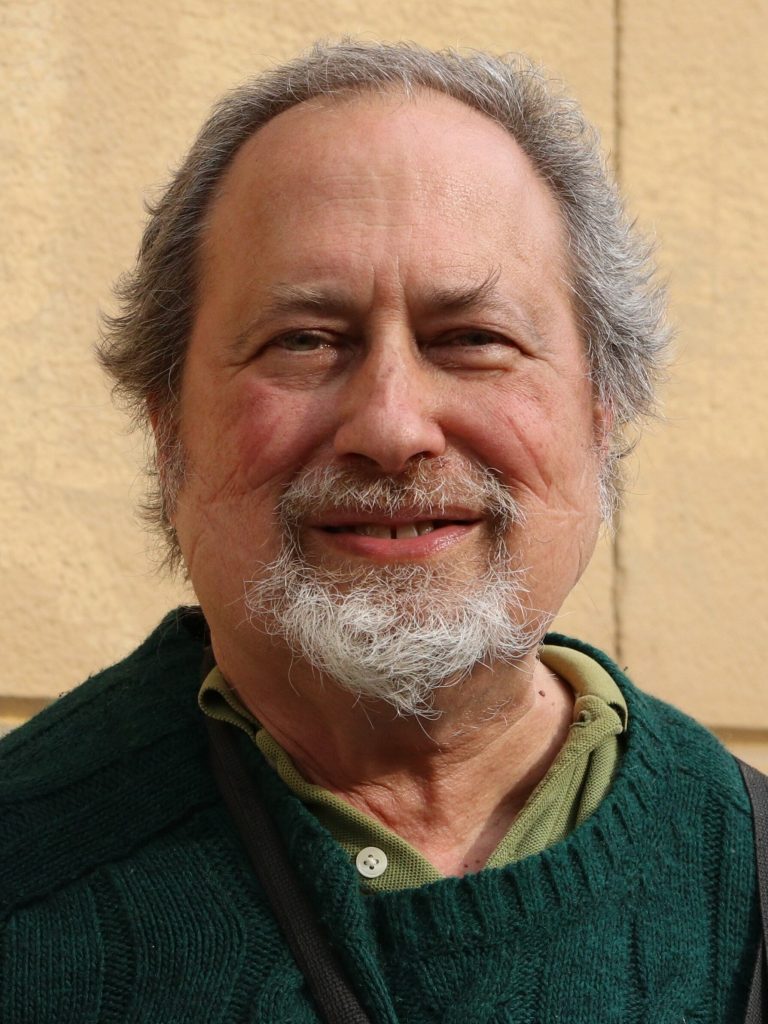
Portrait: Richard Stallman in Bologna in 2024, Patafisik, cropped version from Wikimedia Commons, CC BY-SA 4.0.
Nominate a programmer
Know a programmer whose work deserves a sticker? We welcome nominations for widely recognised and lesser-known contributors. Include the contribution and sources. Editors verify each nomination before publication. Your email is optional and used for follow-up.


